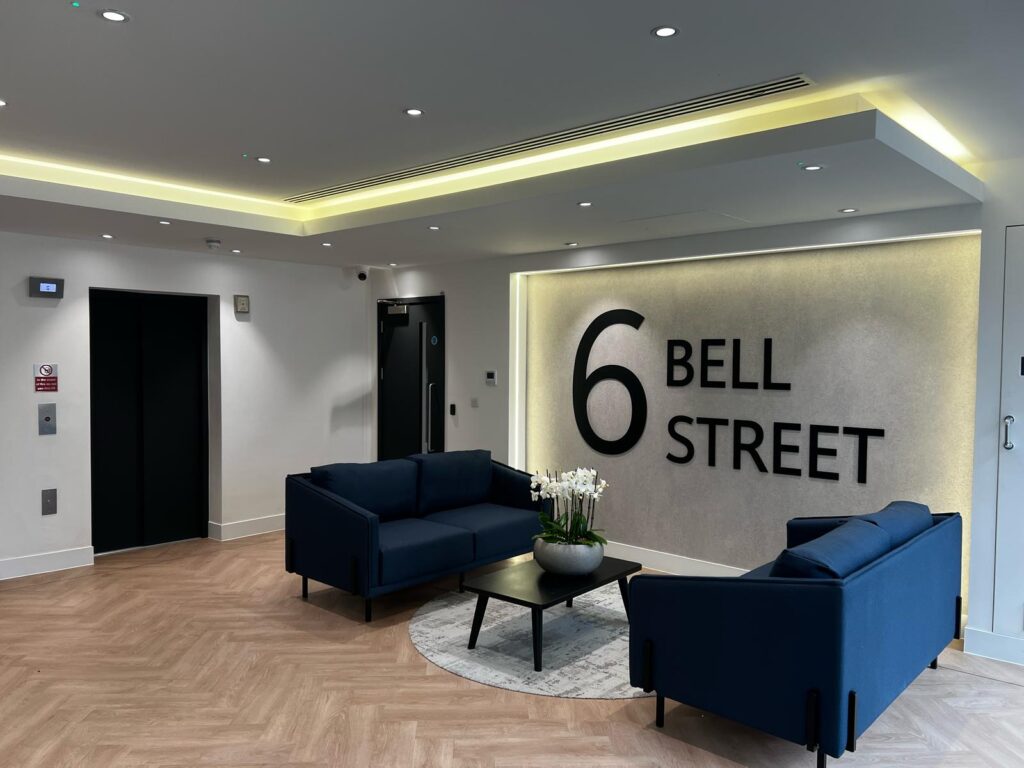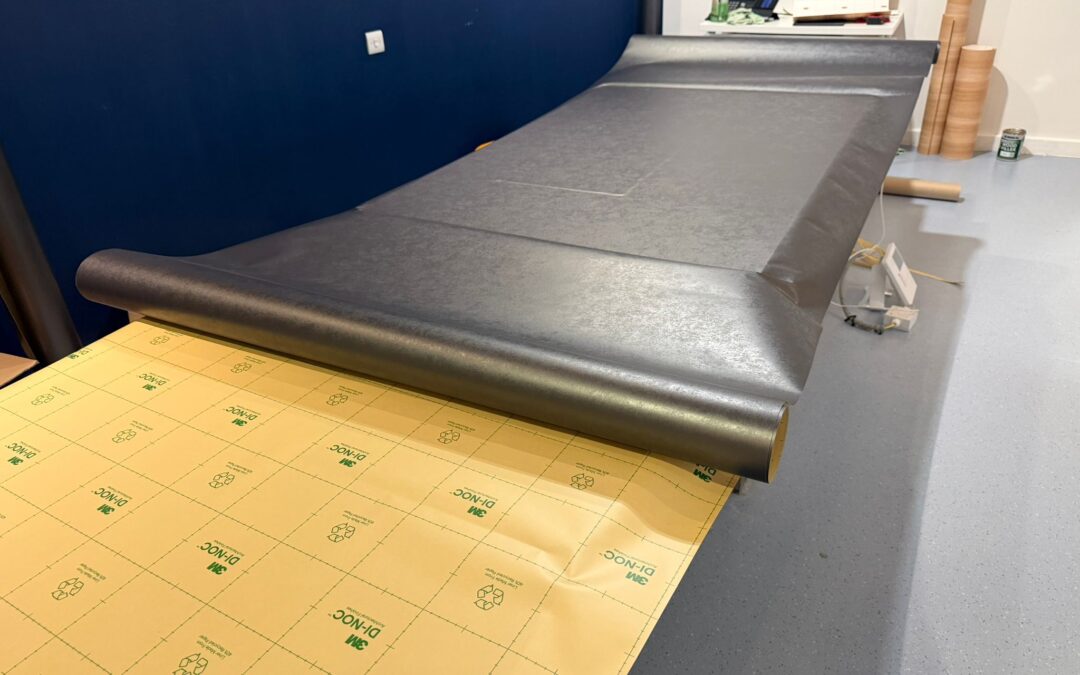
Refreshing a commercial interior sounds exciting until someone mentions the dust, noise, downtime and disruption that can come with it.
Suddenly, that tired reception desk does not seem quite so urgent. The scratched doors can wait another year, and the dated wall panels are not looking too bad after all. Anything can feel preferable to builders arriving, furniture being removed and parts of the workplace being out of action for weeks.
Thankfully, transforming a commercial space does not always require a traditional refurbishment.
Commercial architectural wrapping allows many existing surfaces to be renewed in place, giving them a completely different appearance without the upheaval of removing and replacing them. With careful planning and professional installation, the work can often take place around the normal operation of a business.
Using 3M™ DI-NOC™ Architectural Finishes, reception desks, doors, counters, washroom cubicles, IPS panels and fitted furniture can all be given a new lease of life.
But what actually happens behind the wrap?
What is Commercial Architectural Wrapping
Commercial architectural wrapping involves applying a specialist decorative film to a suitable existing surface. Rather than removing an item because its colour or finish looks dated, the original structure is retained and professionally resurfaced.
3M DI-NOC Architectural Finishes are available in an extensive choice of designs, including woodgrains, metallics, stone effects, textiles and solid colours. These finishes make it possible to update a commercial interior without rebuilding everything underneath.
A reception desk can be transformed with a warm woodgrain. Plain doors can gain a smart, contemporary finish. Washroom panels and cubicles can be renewed without replacing the complete system.
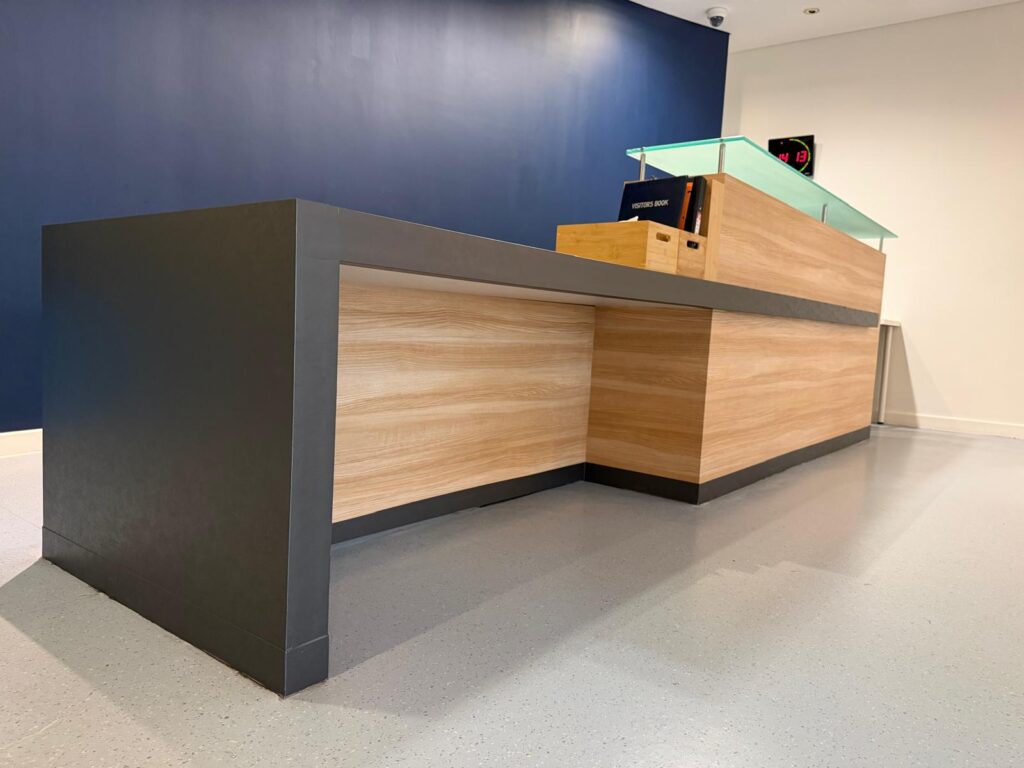
The visual change can be dramatic, but the process is generally far less disruptive than a full rip out and replacement.
It Begins With a Conversation
Every successful commercial architectural wrapping project starts with understanding the space and what the client wants to achieve.
Sometimes the problem is obvious. A reception desk is scratched, a bank of cupboards looks dated or a set of doors no longer suits the surrounding interior. In other cases, a business may be updating its brand and wants its workplace to reflect a new colour palette or style.
We also need to understand how the area is used. Is it a busy reception that welcomes visitors throughout the day? Is it a washroom that cannot be taken out of use for long? Is it a retail counter, office kitchen or communal space?
These details help us determine when installation should take place, how the project can be divided into manageable sections and which surfaces should be completed first.
A commercial refurbishment should not only look great when it is finished. It should also be organised in a way that causes as little inconvenience as possible.
Identifying Which Surfaces Can Be Wrapped
One of the first things we assess is whether the existing surface is suitable for architectural wrapping.
3M DI-NOC films can be applied to a wide variety of smooth and stable surfaces, including some curved forms. Suitable applications can include reception desks, internal doors, wall panels, cupboards, counters, tables, lift interiors, washroom cubicles and IPS panels.
The important thing is that the item underneath remains structurally sound.
A fitted desk may look old fashioned while still being perfectly solid. A door may have years of useful life left, even though its colour no longer works. Washroom panels might be in good condition but visually tired.
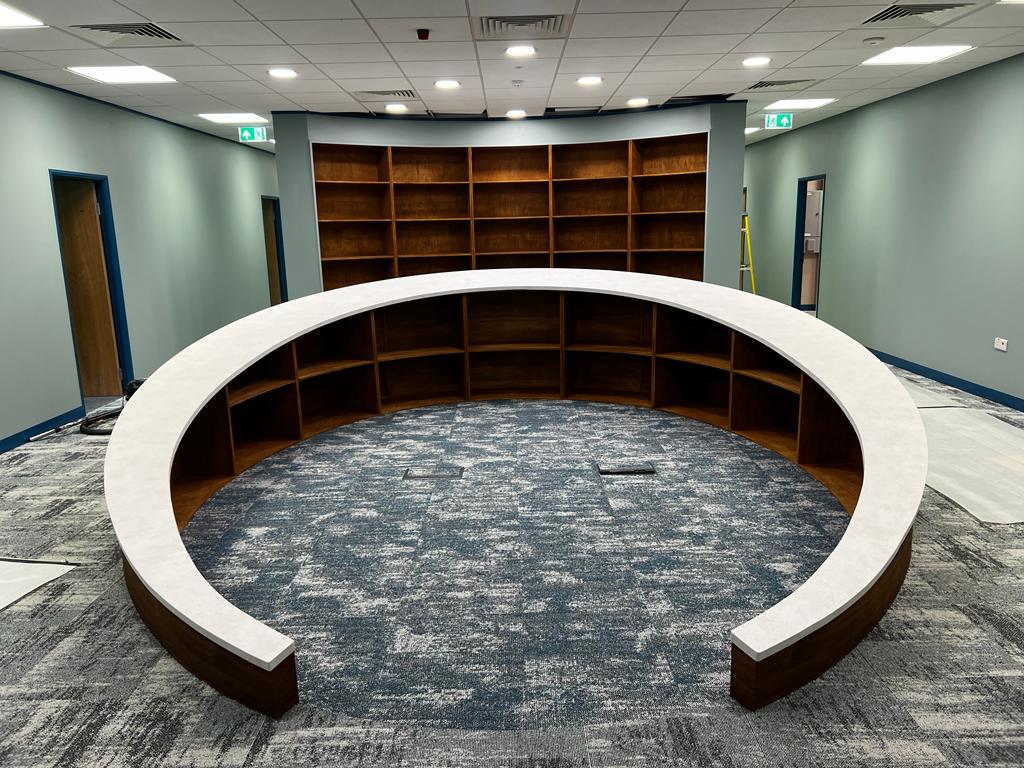
Wrapping allows that useful structure to remain in place while the visible surface is refreshed.
Not every item will be suitable. If a surface is badly damaged, unstable or unsuitable for architectural film, we will say so. A professional site survey helps us identify where wrapping will deliver the right result and where another solution may be more appropriate.
Choosing the Right 3M DI-NOC Finish
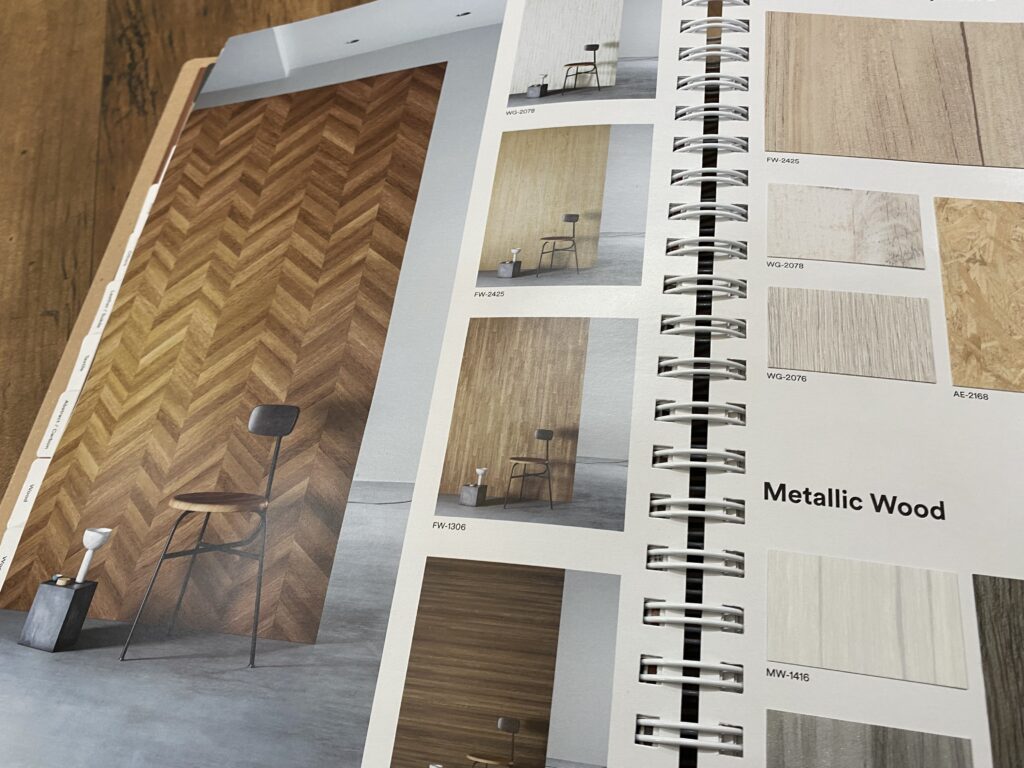
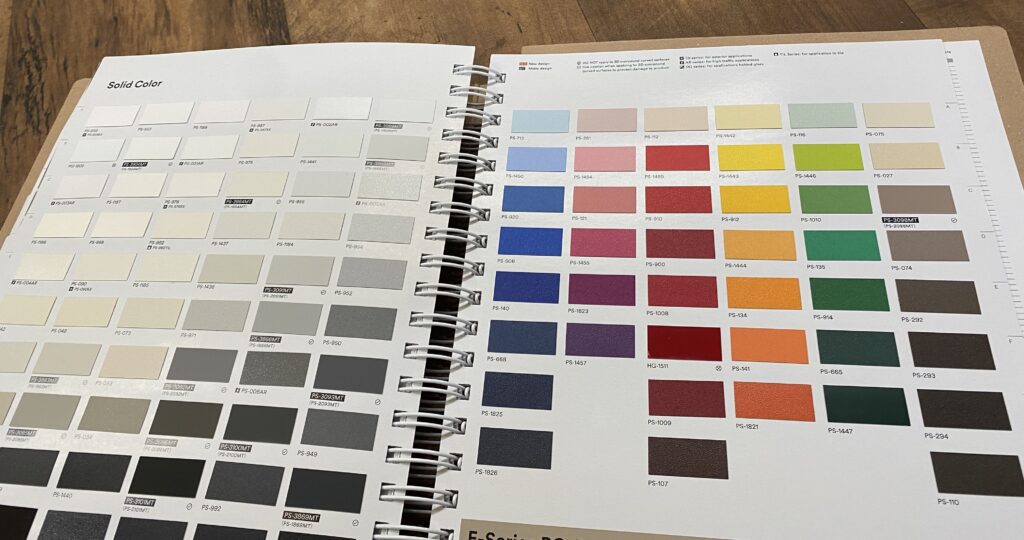
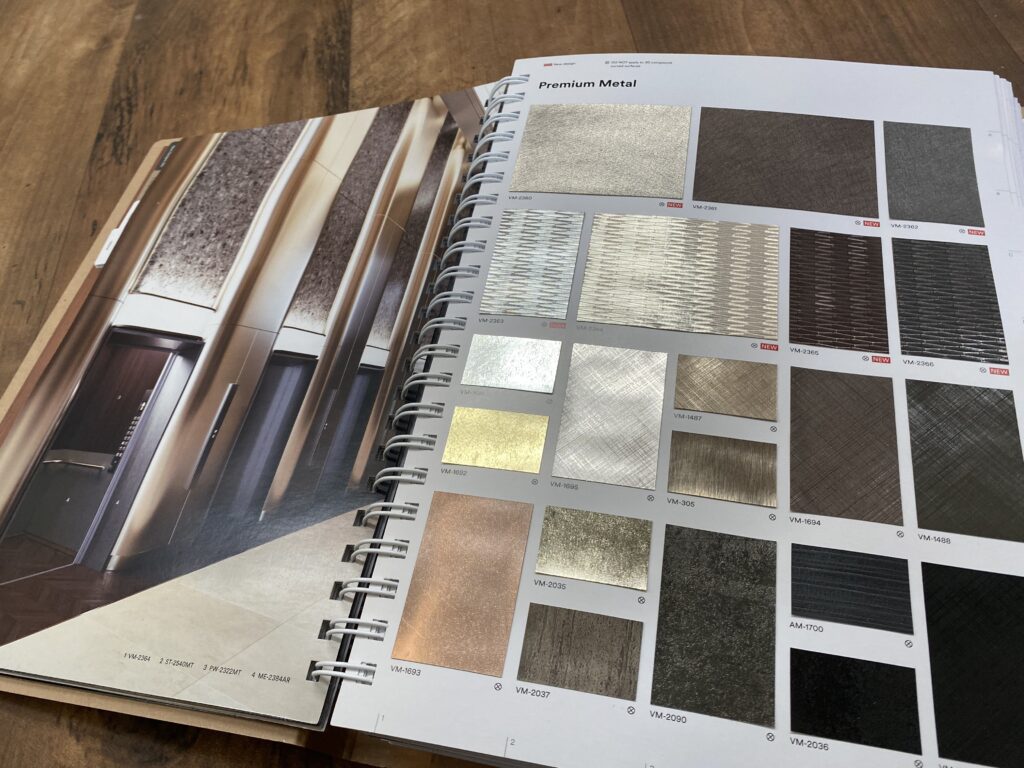
This is often the part our clients enjoy most.
3M DI-NOC Architectural Finishes come in a huge range of colours, patterns and textures. Some are subtle and understated, while others make a much stronger visual statement.
The right finish needs to complement the lighting, flooring, furniture, surrounding interior and brand identity. It must also suit the purpose of the space.
A warm woodgrain can make a reception area feel more welcoming. A soft neutral can create a calmer office environment. Dark finishes add contrast and definition, while metallic effects can introduce a contemporary or premium feel.
Physical samples are particularly helpful because colours and textures can appear different under changing light. A finish that looks cool in a sample book may feel warmer when placed beside the existing flooring or viewed under indoor lighting.
Taking time at this stage helps ensure the final scheme feels considered, coordinated and right for the building.
Planning Around a Busy Workplace
Commercial spaces rarely stop operating simply because refurbishment work is taking place.
Employees still need to work, visitors still need to enter the building and essential facilities must remain available. This is where commercial architectural wrapping really comes into its own.
Unlike a major rip out, wrapping can often be organised in stages. One area can be completed and returned to use before work begins on the next. Where possible, installation may also be arranged around the busiest working hours.
A group of doors might be completed floor by floor. A large reception counter can be divided into sections. Washroom areas can be worked on individually so that other facilities remain accessible.
There is no single plan that suits every building. The installation schedule should reflect how the space operates and what will cause the least disruption. Clear communication between the client, facilities team and installers makes the entire process easier to manage.
Surface Preparation Makes the Difference
The most dramatic part of an architectural wrap is seeing the new finish appear, but much of the skill lies in the preparation.
The existing surface must be carefully cleaned to remove dust, grease and residue. Small imperfections may need to be repaired or smoothed, while edges, corners, handles and fittings must all be assessed before the film is applied.
Our installers will apply the correct primer for the surface and film being used. Choosing and applying the appropriate primer is particularly important around edges, corners and other areas that may experience additional stress. It helps support secure adhesion and a durable finish.
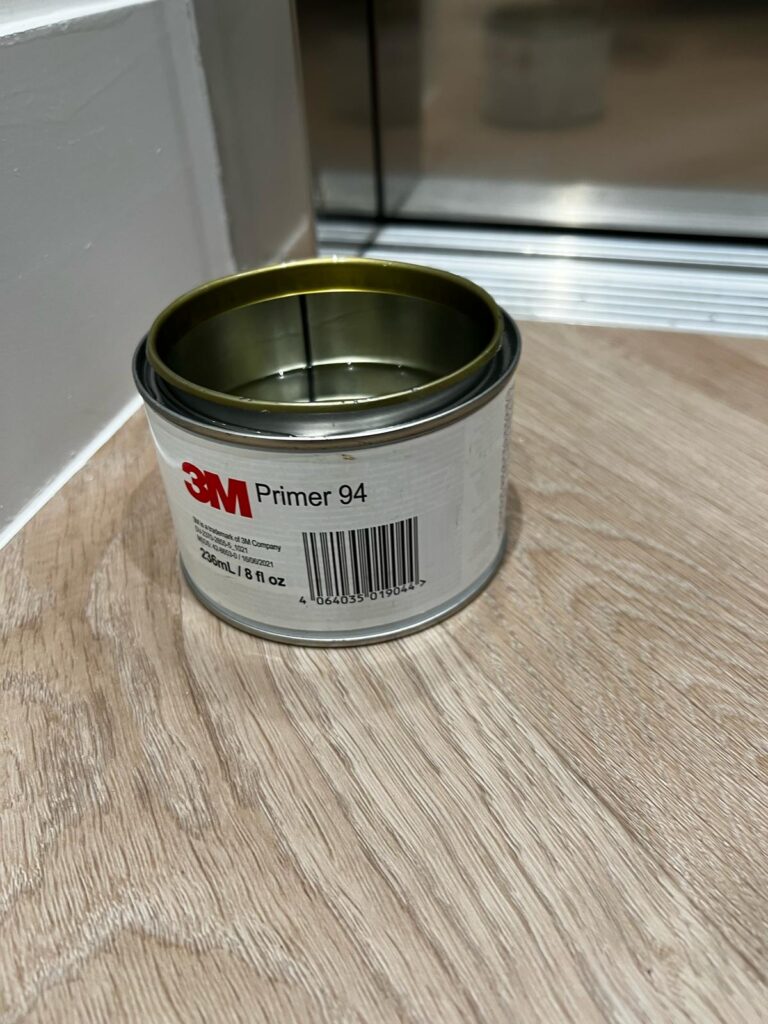
It can be tempting to think the film will simply hide everything underneath, but a professional wrap does not work like that. Good preparation creates the foundation for a clean and convincing result.
Our installers also consider the shape of the surface, the direction of the pattern and where joins will be least noticeable. With a woodgrain finish, for example, the grain should flow naturally across the item.
Anyone who has struggled to apply a small sticker in a straight line will appreciate that wrapping an entire reception desk is a rather different challenge.
Installed by 3M DI-NOC Endorsed Installers
The quality of an architectural wrap depends on more than the film itself. Professional preparation, application and finishing are essential if the completed surface is to look right and perform as intended.
All our in-house architectural film installers are 3M DI-NOC Endorsed Installers. Signwrite Studios is also recognised as a 3M Select Graphic Provider at Silver level.
For our clients, this provides valuable reassurance. Their project is being completed by a team that understands the product, the preparation requirements and the specialist installation techniques involved.
Our installers work methodically, paying close attention to pattern alignment, edges, corners and joins. The aim is for the finished surface to feel like a natural part of the interior, rather than something that has simply been stuck over the top.

Less Mess, Less Waste and Less Disruption
One of the biggest benefits of commercial architectural wrapping is that it makes use of what is already there.
When a sound desk, door or panel is removed purely because its appearance has become dated, usable material may be discarded. Replacement also requires new items to be manufactured, packaged, transported and installed.
Wrapping helps extend the useful life of existing fixtures by renewing the part people actually see. It encourages businesses to ask whether an item is truly worn out or whether it simply needs a new finish.
There are practical advantages too. Keeping fitted items in place can mean fewer trades on site, less noise and less material moving through busy areas. For an office, hotel, shop, school, healthcare setting or leisure venue, reducing this upheaval can be incredibly important.
Wrapping is not suitable for every surface, but where the underlying item remains sound, it can offer a highly effective alternative to replacement.
Is Architectural Wrapping Suitable for an Occupied Building?
In many cases, architectural wrapping is particularly well suited to busy and occupied commercial buildings.
The work can often be divided into stages, allowing the wider organisation to continue operating. Because existing fixtures remain in place, there is usually less noise, mess and movement of materials than there would be during a full replacement programme.
The exact schedule will depend on the size of the project, the condition of the surfaces and how each part of the building is used. A site survey allows us to plan an installation programme that works around the client wherever possible.
Could Your Commercial Space Be Wrapped?
If you have a reception desk, fitted furniture, doors, panels or other surfaces that are still sound but looking past their best, replacement may not be your only option.
3M DI-NOC Architectural Finishes can create the appearance of wood, metal, stone and many other materials while retaining the existing item underneath. With the right finish and professional installation, the result can completely change how a space looks and feels.
At Signwrite Studios, our in-house 3M DI-NOC Endorsed Installers can guide you through the complete process, from the initial site survey and sample selection to preparation and installation.
As a 3M Select Graphic Provider at Silver level, we combine specialist product knowledge with the practical experience required to deliver high-quality commercial architectural wrapping throughout Berkshire and across the UK.
Sometimes the smartest transformation is not about starting again. It is about recognising the potential in what you already have.
If you would like to explore what could be wrapped within your workplace, retail space, hospital, leisure venue or commercial property, contact the Signwrite Studios team for a friendly conversation about the possibilities.