
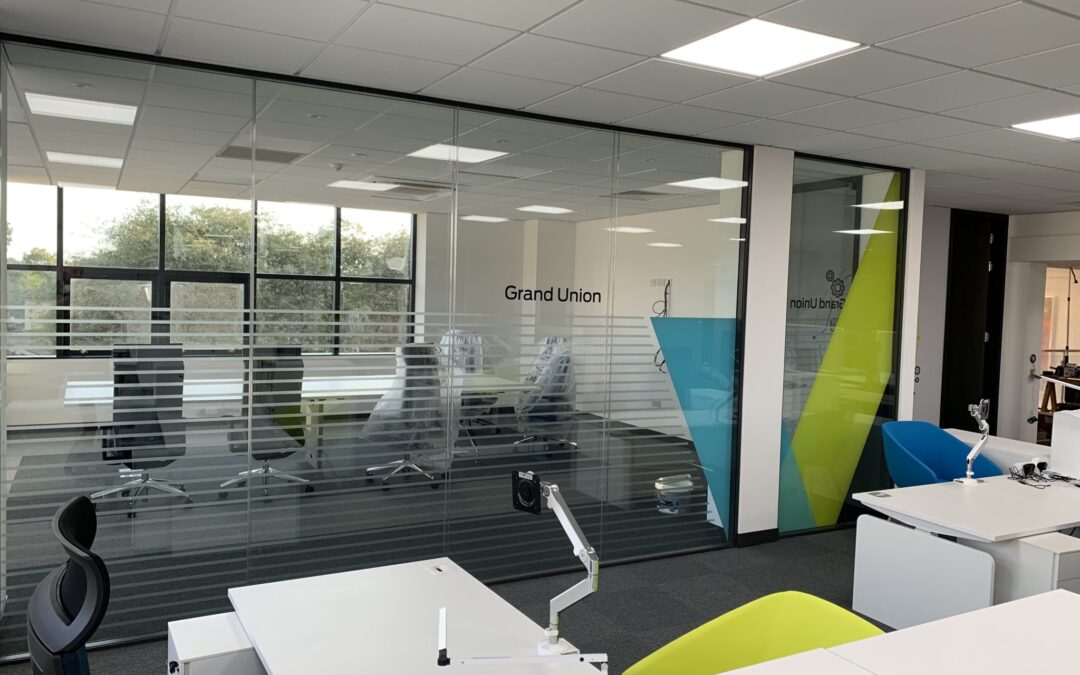
Office glass manifestation can make an space feel brighter, more spacious and better connected. It allows natural light to move through meeting rooms, corridors and shared areas, but it also needs careful consideration.
Implementing office glass manifestation can significantly enhance the aesthetic and functionality of your workspace.
Choosing the right office glass manifestation is crucial for balancing transparency and privacy in contemporary design.
Our team specialises in innovative office glass manifestation solutions tailored to your specific business needs.
Large areas of clear glazing can be difficult to see. Meeting rooms may need more privacy, and untreated glass can feel disconnected from the rest of an interior scheme. The right window manifestation brings these requirements together, creating a finish that supports safety, privacy, branding and the overall design of the workplace.
At Signwrite Studios, we work collaboratively with clients, architects, interior designers, project teams and facilities leads to develop glass finishes that feel like a considered part of the space. That might mean translating an established design concept into a practical film specification, helping a facilities team improve privacy, or developing a complete visual treatment for a new office or refurbishment.
Incorporating office glass manifestation into your design can create a seamless connection between different spaces.
Utilising office glass manifestation effectively can also enhance employee well-being through improved natural light access.
What is office window manifestation?
Window manifestation is a visible treatment applied to glass doors, partitions, windows and screens. It is commonly created using frosted film, printed graphics, cut vinyl, decorative film, logos or repeated patterns.
Its primary safety purpose is to make transparent glazing easier to see. However, well-designed glass manifestation can also provide privacy, reinforce a brand, support wayfinding and add another layer to an interior design scheme.
Ensuring compliance with the UK regulations on office glass manifestation is essential for workplace safety.
We work with commercial grade, specialist films that can be applied to existing glazing, they offer a flexible way to transform a space without replacing the glass.
Implementing office glass manifestation helps to make transparent surfaces safer for all employees and visitors.
The guidelines for office glass manifestation ensure that all glass surfaces meet safety standards without compromising design.

Choosing the right office glass manifestation technique can significantly impact the overall aesthetic of your workplace.
Consulting with experts in office glass manifestation can lead to innovative solutions tailored for your space.
Understanding the UK requirements
Effective office glass manifestation enhances both safety and aesthetics, making it a valuable addition to any office.
Incorporating office glass manifestation into your design strategy can optimise space usage within your office.
Considering the role of office glass manifestation during the planning phase can lead to a more integrated design.
When executed well, office glass manifestation elevates the overall design aesthetic of modern workspaces.
Office glass manifestation is also an opportunity to reinforce branding throughout the workplace environment.
The requirements affecting a project depend on the building, its location and the way the glazing is used.
For workplaces in Great Britain, Regulation 14 of the Workplace (Health, Safety and Welfare) Regulations 1992 says that transparent or translucent surfaces should be appropriately marked, or incorporate features that make them apparent, where necessary for health and safety. The Health and Safety Executive guidance provides further information.
For buildings in England, Section 7 of Approved Document K: Protection from Falling, Collision and Impact provides specific guidance on the manifestation of glass doors and glazed screens in offices and other non-domestic buildings. The relevant guidance begins on page 39 of the document.
Choosing the right graphics for office glass manifestation can enhance brand visibility in office spaces.
Its guidance recommends manifestation at two levels, between 850mm and 1000mm and between 1400mm and 1600mm above floor level. The design should contrast visually with the background when viewed from both sides and in different lighting conditions.
A logo or sign used as manifestation should be at least 150mm high and repeated where required across a glazed screen. Decorative features, continuous bands or broken lines should be at least 50mm high. Glass doors within glazed screens may also need additional contrasting treatment so that the door can be clearly distinguished from the surrounding glass.
Building standards vary across England, Wales, Scotland and Northern Ireland. The requirements for an individual project should therefore be confirmed with the relevant building control professional or project lead.


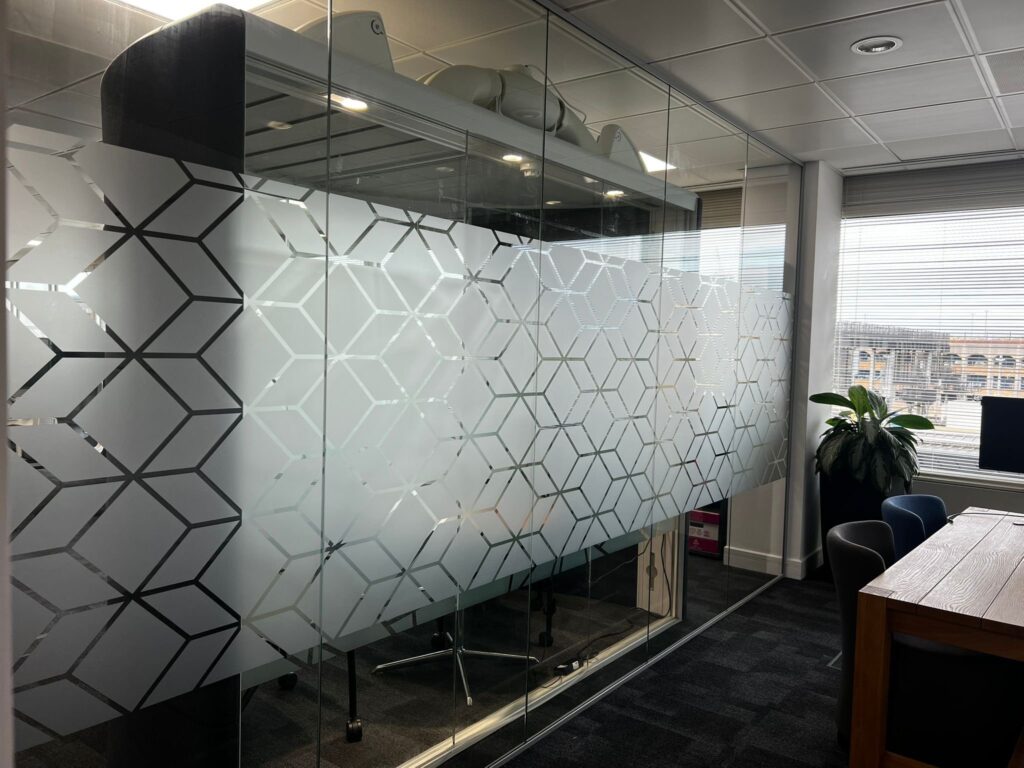
Working together to create a cohesive glass design
Integrating office glass manifestation with other design elements fosters a cohesive workplace atmosphere.
Office glass Manifestation is most successful when it is considered alongside the wider interior rather than added at the end of a project.
We can work from an existing design pack, brand guidelines, architectural drawings or an initial idea. By speaking with the people responsible for the design, delivery and ongoing management of the workplace, we can understand how each area needs to perform.
A design team may want the glass to complement flooring, furniture, wall finishes and lighting. A brand lead may be looking for a subtle way to introduce a logo or graphic language. A facilities manager may need privacy in particular rooms while retaining as much natural light as possible. The project team may also need an installation programme that fits around other trades or avoids disruption to an occupied office.
Bringing these requirements together early helps create a consistent scheme across reception areas, meeting rooms, corridors and breakout spaces. It also allows the correct materials, print methods and installation surfaces to be specified before production begins.


Front-applied, rear-applied and reverse-printed graphics
Where a graphic is applied can make a significant difference to the finished appearance.
A front-applied, or first-surface, graphic sits on the side of the glass facing the viewer. This can give printed colours and cut details a strong, immediate appearance. It is useful when the design needs to be viewed clearly from a particular direction or when the opposite side of the glass is not accessible.
A reverse-printed graphic can be applied to the rear face of the glazing and viewed through the glass. This can create a smooth, polished effect because the glass sits in front of the printed image. It also protects the printed surface from regular contact on the viewing side.
Films can also be combined on the front and rear faces of the same glass. Layering print, frost and cut graphics can create depth, changing the way the design looks from different angles. A subtle frosted pattern on one surface could be paired with coloured branding or printed detail on the other.
These methods need to be planned carefully. The glass type, lighting, viewing direction, colour accuracy, privacy requirement and access for installation can all influence the best solution. Producing samples or test panels can be valuable when a project includes layered films, detailed patterns or particular brand colours.
Connecting glass finishes with the wider workplace
Office glass manifestation does not need to stand alone. Its colours, shapes and patterns can be coordinated with reception signs, wall graphics, door wraps, room names and wayfinding.
A repeated shape from the company logo might run across meeting room glazing and reappear in a reception graphic. Different departments could use variations of the same pattern or colour palette. Room names and directional information can also be incorporated into the glass design, helping visitors navigate the building more easily.
By considering manifestation as part of a broader office branding scheme, the finished workplace feels more cohesive and professionally resolved.

Let’s develop the right glass finish for your space
Whether you already have a completed design specification or would like help exploring the possibilities, our Signwrite Studios team can support the project from survey and material selection through to artwork, production and installation.
We work with business owners, designers, architects, fit out contractors, project managers and facilities teams to produce glass finishes that complement the brand, interior aesthetic, privacy needs and safety requirements of each space.
We work with businesses across Berkshire, Hampshire, Surrey, London and beyond.
If you are planning a new office, refurbishment or glazing update, contact the Signwrite Studios team to discuss your office glass manifestation ideas. We would be happy to look at your glass, understand the wider design scheme and help create a practical, cohesive finish.