
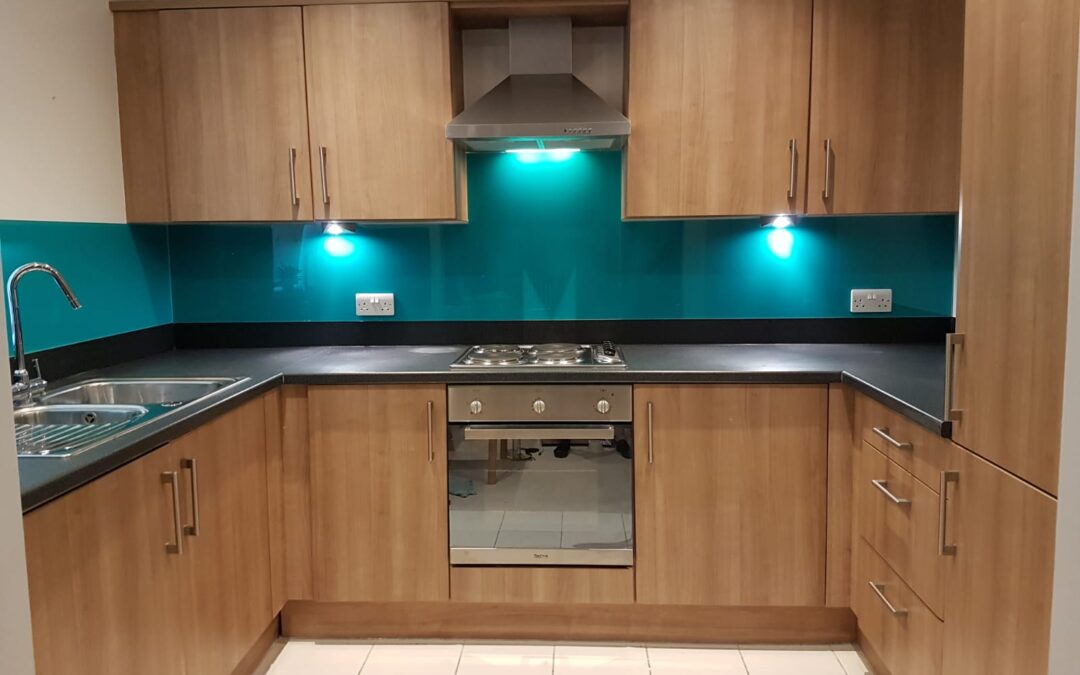
“Do you wrap kitchens?”
It’s one of those questions that sounds simple, and in many ways it is. The straightforward answer is yes, we can, and we have. Kitchen wrapping is absolutely something that can be achieved using the same architectural films and techniques we use across a wide range of projects.
However, if you’ve landed here expecting a quick yes and a price guide, it’s only fair we give you the fuller picture. Because while we do wrap kitchens, it’s not where the majority of our work sits and there’s a very deliberate reason behind that.
Our story with architectural finishes didn’t begin in residential spaces. It started when an opportunity came along that opened our eyes to what was possible with surface transformation. Through specialist training, we were introduced to materials that went far beyond decorative vinyl. These were architectural films designed for performance, built to withstand the kind of daily use you’d expect in busy commercial environments.
That’s where everything shifted.
We began to see surfaces differently. Not as things that needed replacing when they became tired or outdated, but as opportunities. With the right materials and the right approach, existing fixtures could be completely transformed without being removed. Reception desks, wall panels, doors, counters, all of it could be reimagined in place.
In the world of commercial property, that’s a game changer.
Refurbishment projects often come with disruption. Shutting down a retail unit, pausing operations in an office, coordinating multiple trades, it all adds time, cost, and complexity. Architectural wrapping offered a smarter alternative. Instead of stripping everything out and starting again, we could work with what was already there and elevate it.
No major downtime. No lengthy construction phases. No unnecessary waste.
That approach naturally led us into the environments where it makes the biggest impact: commercial spaces, retail fit-outs, offices, and high-end interiors where both appearance and durability matter.
It also sits perfectly alongside what we’ve always done as a business.
At Signwrite Studios, signage is at the heart of what we do. External fascia signs, internal branding, wall graphics, plaques, these are often the starting point for our customers. When someone comes to us for signage, it usually means something bigger is happening. A new office. A new retail space. A rebrand. A move.
There’s already a conversation around identity, experience, and how a space should feel.
That’s where architectural films come into their own, and why they’re such a natural complement to our signage services. They allow us to extend branding beyond just graphics and into the physical surfaces of a space. Instead of adding branding on top, we can integrate it into the environment itself.
A reception desk can reflect brand colours and textures. Wall panels can align with a company’s visual identity. Existing fixtures can be updated to feel cohesive with new signage, rather than sticking out as part of the “old” space.
It becomes a much more complete transformation.
In many cases, architectural wrapping is the conversation starter that unlocks the rest of a fit-out. Once clients realise, they don’t need to replace everything to achieve a new look, it changes how they approach the entire project. It gives flexibility. It saves time. and it often opens up design possibilities that weren’t initially considered.
All of that is why commercial work has become such a strong focus for us. It’s where the value of these materials and techniques is most clearly realised.
So where does that leave kitchens?
Coming back to the original question, the same principles absolutely apply. Kitchen doors, cabinets, panels, and certain surfaces can be wrapped to create a completely new finish. Whether it’s a clean modern look, a textured woodgrain, or something more unique, architectural films offer a wide range of design options.
We’ve worked on kitchens before, and when the right materials are used and the installation is done properly, the results can be impressive. A tired space can be refreshed without the cost and disruption of a full replacement.
But it’s important to be honest about where our services sit within that market.
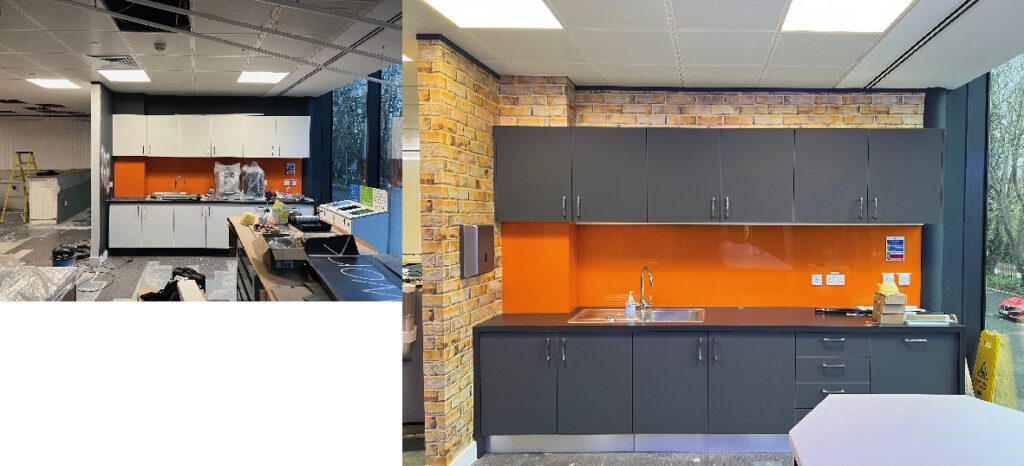
The materials we use are premium architectural film finishes. They’re designed for durability, consistency, and long-term performance in demanding environments. That comes with a level of cost and precision that makes perfect sense in commercial settings, where surfaces are used heavily and branding plays a key role.
In a typical residential kitchen, the priorities are often different.
Many homeowners are looking for a cost-effective way to update their space, and there are specialists who focus specifically on that side of the market. They’re set up to deliver quick turnarounds and budget-friendly solutions tailored to everyday residential needs.
Our work tends to sit at a slightly different end of the spectrum.
We focus on high-end finishes, detail-driven installations, and projects where the overall design and longevity of the result are key considerations. That doesn’t mean we won’t take on a kitchen project, it just means we approach it in the same way we would a commercial space.
For some clients, that’s exactly what they’re looking for.
Higher-end residential properties, for example, where finish quality is a priority. Developers who want to refresh kitchens in show homes without replacing them. Landlords or property managers looking for a durable upgrade between tenancies. Or homeowners who simply want something that goes beyond a standard refresh.
In those situations, kitchen wrapping can be a great fit for what we do.
More broadly, what we’re really offering isn’t just a service, it’s a different way of thinking about refurbishment.
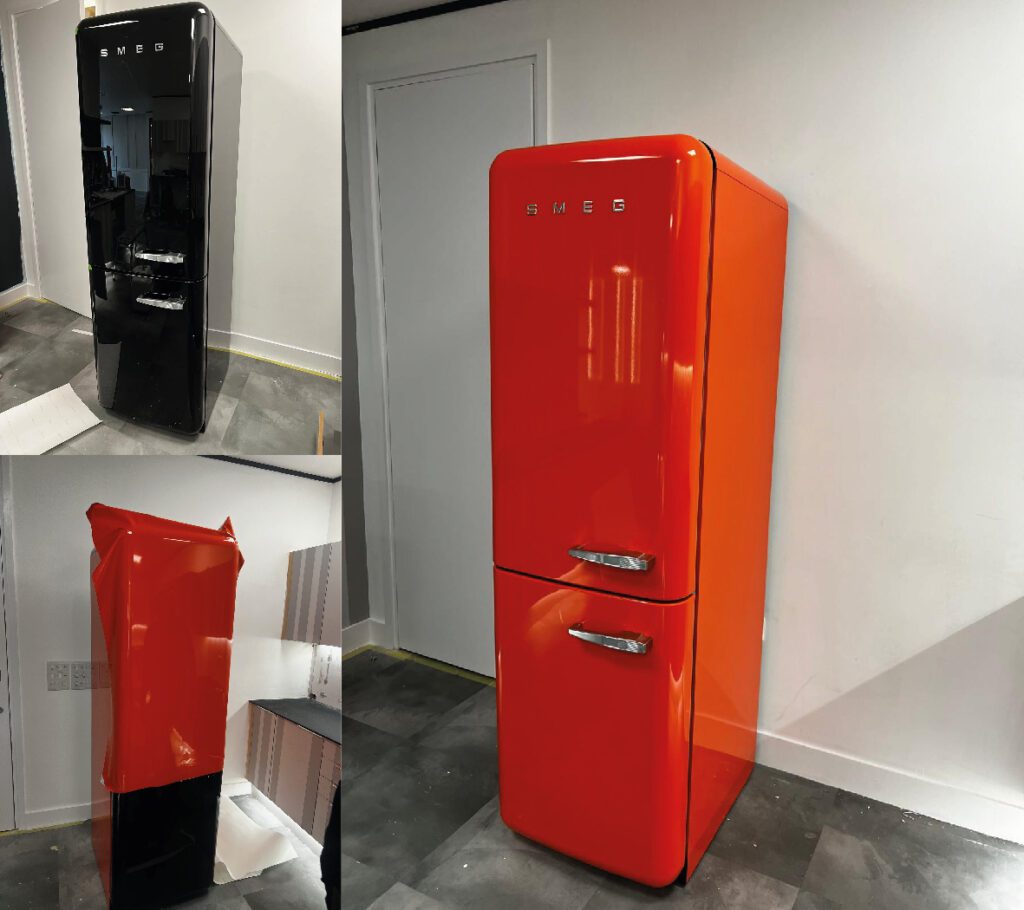
Instead of assuming that change requires removal, architectural wrapping asks whether transformation can happen through adaptation. It’s about recognising the potential in what already exists and using the right materials to bring it in line with a new vision.
That idea runs through everything we do, whether it’s a single feature wall or a full commercial fit-out.
It’s why so many of our projects start with signage and naturally evolve into something bigger. Once the conversation begins around branding and identity, it often leads to a wider discussion about the space itself. How it looks, how it feels, and how everything works together.
Architectural films sit right at the centre of that conversation.
So, do we wrap kitchens?
Yes, we do. We have, and we can.
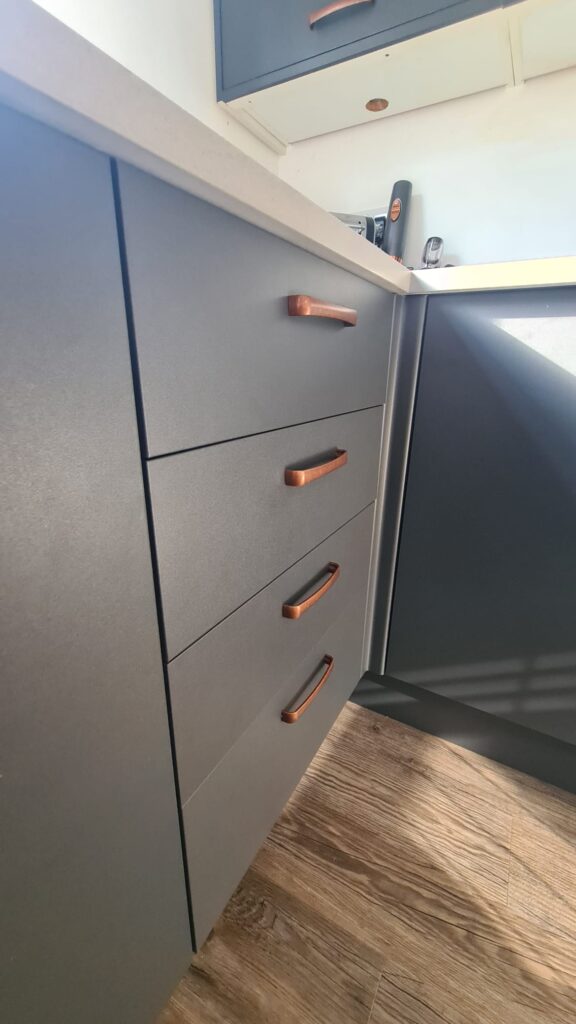
But more importantly, we help clients decide whether it’s the right approach for what they’re trying to achieve. Because the goal isn’t just to apply a finish, it’s to deliver a result that makes sense, both visually and practically.
If you’re considering wrapping your kitchen, or you’re working on a space that needs to be brought in line with a new brand or design direction, we’re always happy to talk it through.
No hard sell, no overcomplication, just an honest conversation about what’s possible and what will work best for you.
Because sometimes the simplest question opens the door to a much bigger opportunity.
If you’ve got a project in mind, whether it’s a kitchen, a workspace, or a full commercial fit-out, get in touch with us at Signwrite Studios. We’d love to hear what you’re working on and help you explore how architectural finishes and signage can come together to transform your space.